
Food and Logistics: How Flexible Warehousing Models Are Disrupting Traditional Distributor Leases
Let’s be honest: The old way of doing things in Southern California is starting to feel a bit like a trap. For decades, the “standard” move for a distributor was to sign a rigid, multi-year lease on a fixed building and just hope their growth (or market volatility) didn’t outpace those four walls.
But today, with omni-channel fulfillment moving at lightning speed, those static agreements are becoming a major liability. In this fast-moving world of food and logistics, staying “stuck” in a long-term contract is the last thing you want. More brands are moving toward an asset-light distribution model that prioritizes agility over owned real estate.
Breaking the Cycle of the “Goldilocks” Lease
We’ve all seen it: Companies either have massive amounts of empty space during the off-season, or they’re literally bursting at the seams during a peak. This is a huge headache in food and beverage warehousing logistics, where demand volatility in food supply chains can shift overnight due to a new trend or seasonal spike.
This is exactly why so many businesses grappling with food and logistics are turning to professional food warehousing and distribution partners who can scale alongside them, rather than keeping them boxed in.
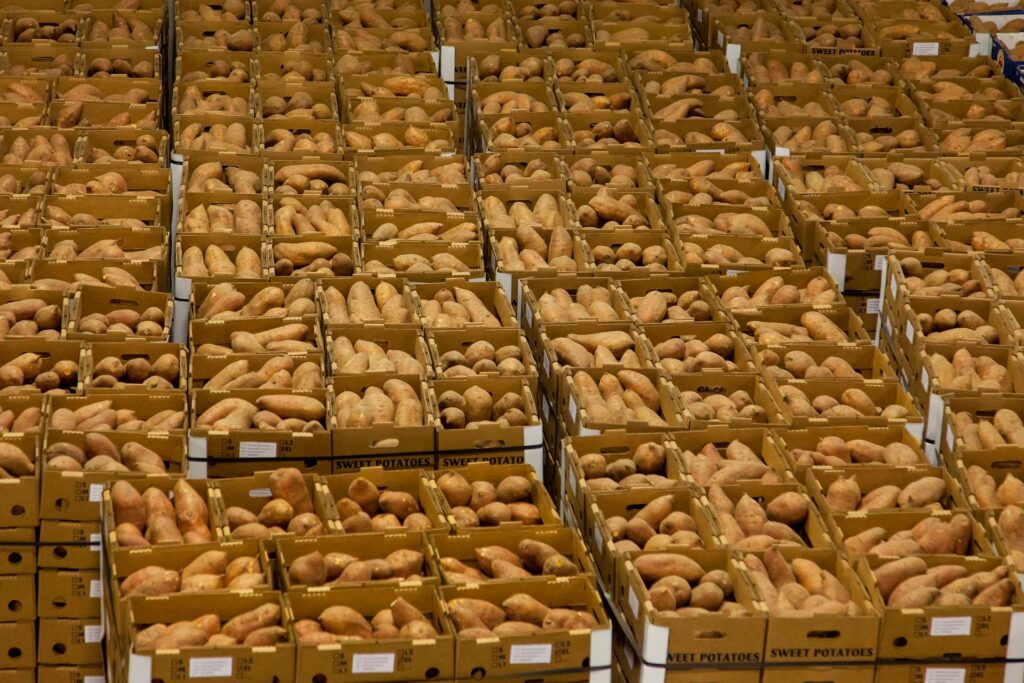
By opting for a month-to-month warehouse lease, you’re finally getting access to genuinely scalable warehousing capacity. Instead of paying for 50,000 square feet you aren’t using, you can allocate warehouse space on demand and pay only for the pallet storage solutions currently on the floor. Moving toward variable storage costs frees up your capital to actually grow your brand.
In the high-stakes world of food and logistics, that extra cash flow can be the difference between hitting your next milestone and getting left behind.
Location is Everything (Especially Near the Ports)
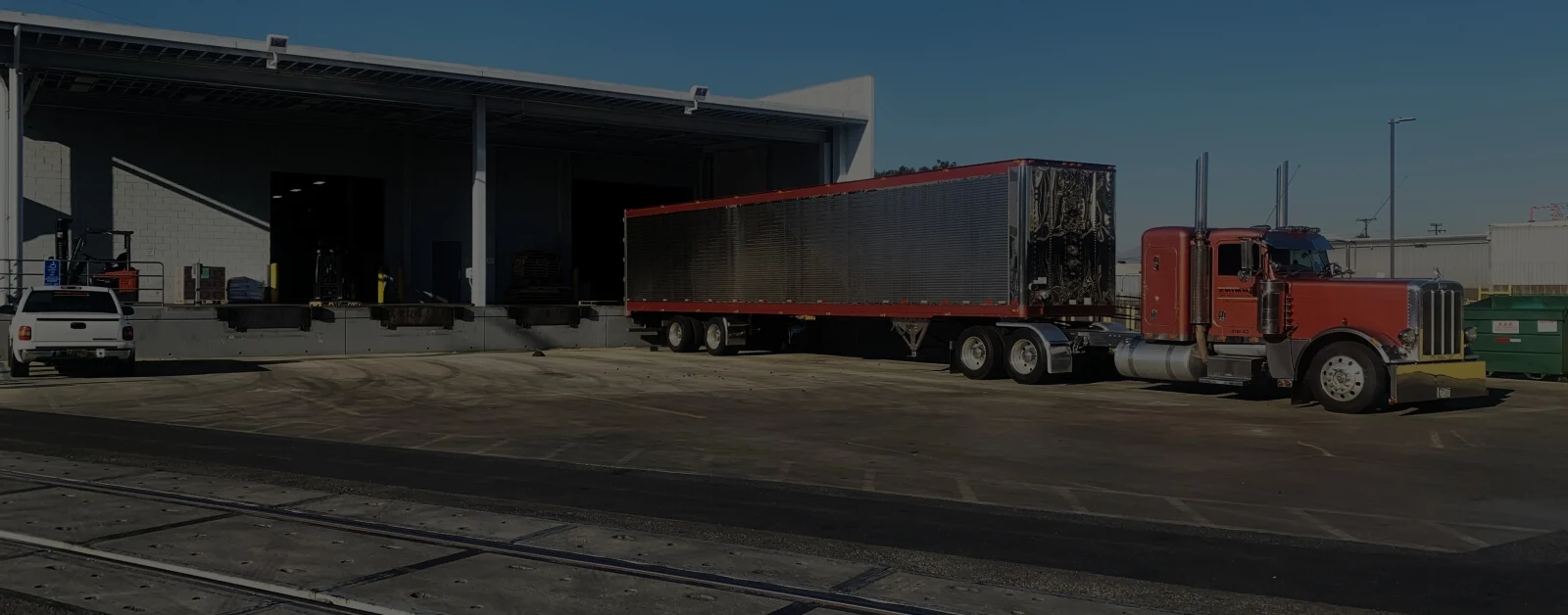
You can have the best product in the world, but if it’s sitting in the wrong spot, you’re losing money. Our Southern California distribution hub in Commerce is strategically positioned to handle West Coast import distribution like a pro. Being adjacent to Port of Long Beach logistics network and Los Angeles port logistics means we can handle transloading services and cross-docking much faster than a warehouse tucked away in the suburbs. High-tier food warehousing and distribution is all about cutting down those “miles to shelf.”
Using shared warehouse space near the ports also allows you to run a much tighter just-in-time inventory strategy. It’s about reducing that “dead time” your goods spend in a truck and speeding up your last-mile delivery solutions for the L.A. market. In the world of food and logistics, every hour you shave off the clock helps maintain freshness and boosts your bottom line.
Why Specialized Infrastructure Matters
Here is something a standard landlord won’t tell you: most industrial buildings aren’t ready for food safety. You need a partner who lives and breathes compliance. As an FDA-registered warehouse, Cummins Logistics offers the food-grade storage facilities that modern brands require. We’re talking about temperature-controlled storage for ambient food storage of your shelf-stable items.
When you look at a full-service food warehousing and distribution model, you get more than just a roof. You get:
- FIFO staging to get items routed quickly.
- Contract logistics tailored to your specific handling needs.
- Freight consolidation to keep your shipping costs from skyrocketing.
This kind of distribution center optimization ensures your products are being actively managed, not just gathering dust. It’s a much more proactive way to handle food and logistics than a traditional lease could ever offer.
Tech That Actually Talks Back: WMS Integration

The real secret sauce to modern disruption is the data. If you’re in a traditional lease, you’re usually on the hook for your own software and IT. But with flexible 3PL solutions, you get warehouse management system integration right out of the box. At Cummins, our smart warehouse management systems give you real-time visibility, so your food and logistics data is always at your fingertips.
The “new normal” is that there is no normal. With shipping rates and consumer habits changing every week, being able to pivot is your superpower. Whether you need a short-term warehouse rental or a long-term partner, moving to a managed food warehousing and distribution model takes the “anchor” of a 10-year lease off your neck. It gives you the freedom to follow the market wherever it goes next.
Ready to ditch the rigid lease and make your supply chain more agile? Contact Cummins Logistics today, and let’s talk about a customized quote for your warehousing and distribution needs.

Devin Cummins, Vice President of Cummins Logistics, is a second-generation logistics and transportation expert. Devin earned his commercial license at 18 and is a graduate of Universal Technical Institute. He spent years building award-winning show trucks and helped shape the West Coast hot rod semi truck style. Through the family-owned business, Devin is committed to caring for both employees and customers like family. Outside of work, Devin enjoys tournament bass fishing, customizing cars and trucks, and perfecting his BBQ skills, even bottling his own award-winning custom BBQ spice blends.