Devin Cummins, Vice President of Cummins Logistics, is a second-generation logistics and transportation expert. Devin earned his commercial license at 18 and is a graduate of Universal Technical Institute. He spent years building award-winning show trucks and helped shape the West Coast hot rod semi truck style. Through the family-owned business, Devin is committed to caring for both employees and customers like family. Outside of work, Devin enjoys tournament bass fishing, customizing cars and trucks, and perfecting his BBQ skills, even bottling his own award-winning custom BBQ spice blends.
Contact Us
Reach out today to optimize your logistics and distribution with efficient and cost-effective warehousing solutions
Southern California is in a prime location to receive shipments from abroad
This has led the area to specialize in high-volume outbound shipping traffic via road, rail, and air infrastructure
The sustained demand has allowed for the development and implementation of new technology which increases efficiency
All of these factors combine to create a perfect environment of logistics and supply chain management
Southern California offers several distinct advantages when it comes to global trade entering the United States. With its several ports, and expansive road and rail network, it’s a critical location for trade entering the US. These goods are then able to be shipped all across the Western half of the country with ease. It’s what makes Southern California a unique location to offer warehousing and cross-docking solutions for businesses.
Advantages in Southern California
The region of Southern California has several key factors which made it such an important hub for trade. 40% of all the goods being shipped into the United States come through the ports of Los Angeles and Long Beach. This created the need for an efficient system of being able to move a large quantity of goods in a timely manner.
The region also has a population of nearly 20 million people, creating a massive local consumer marketplace for selling goods.
Prime Location to Relevant Operations
Southern California also has expansive highway networks, railway connections, and airports for air cargo. These connections to outside regions provide the area with another benefit for the shipping of goods.
Moving inland from the coast, several nearby cities specialize in warehousing and cross-docking. These areas offer the same proximity to road and rail networks for smooth distribution of stored goods. It’s what makes cross dock operations (which is the process of taking goods from an inbound shipment and moving them directly to an outbound shipment) such a vital part of the supply chain. It speeds up the fulfillment process drastically, and gets your products where they need to be faster than traditional warehousing strategies can provide.
Warehousing and Cross-Docking Opportunities
The Southern California region has specialized in dealing with high-volume, and time-sensitive, logistics operations. The constant movement of goods through the area has developed some of the most efficient operations in the world. This includes smart warehousing, efficient distribution, and cross dock operations which are among the best in the world.
These warehousing and cross-docking operations are paired with the newest technology to provide an even more efficient service. This includes automated sorting, real-time tracking, and consolidation of products into a single shipment. These all help keep overhead costs low, while also providing fast distribution.
Outlook and Planning
E-commerce warehousing continues to grow at lightning speed, and with these goods primarily coming from manufactures in Asia, there will be a sustained demand for warehousing and distribution activities in Southern California. This will lead to more developments in making supply chains more responsive, and more efficient.
If your established business wants to take advantage of all the warehousing and cross-docking opportunities which are available in the Southern California region, our expert team is standing by to offer solutions. We have been operating out of Southern California for nearly 50 years, and we have the time-tested expertise in the region to meet all of your needs. We have the best team when it comes to warehousing and cross dock operations in the area. Contact us today for a free quote.
Contact Us
Reach out today to optimize your logistics and distribution with efficient and cost-effective warehousing solutions
In the early days of the Covid-19 pandemic, companies scaled back production in response to a rapid decline in consumer demand. But, by the end of 2021, businesses began to reopen and demand consequently skyrocketed.
The global supply chain was ill-prepared for this type of interruption, and it underscored the importance of having a backup plan in place in the event of a breakdown in the supply chain. Unfortunately, Southern California is no stranger to these types of breakdowns. Partnerships with third-party warehousing companies can, however, help your business overcome the challenges posed by disruptions.
But before explaining how, let’s first cover some of the biggest threats to the supply chain for Los Angeles-based businesses.
An Unpredictable Environment
Southern California is home to two of the nation’s largest ports—the Ports of Los Angeles and Long Beach—along with thousands of miles of highways and railroads. Supply chain breakdowns can stem from any one of them.
Southern California’s unique geographic and economic position creates special vulnerability to supply chain disruptions around these ports. Each risk brings distinct challenges to logistics operations that third-party warehousing companies must plan for:
Wildfires:
The devastating 2020 wildfire season across California inflicted a staggering financial toll exceeding $4.2 billion dollars in destroyed homes, businesses, and infrastructure.
Jump ahead to this year, and we’ve witnessed trucking fleets scrambling to establish alternative pathways when flames engulfed critical transportation corridors. These unexpected detours haven’t just stretched delivery timelines – they’ve hammered companies with unplanned fuel expenses and labor costs while leaving customers frustrated by shipping uncertainties.
U.S. BLS data show that employment drops by an average of half a percentage during fire events in California, including a decrease in industries related to trade, transportation, and utilities.
Third-party warehousing companies with distributed inventory across multiple facilities were able to better maintain fulfillment rates despite road closures. Also, businesses with comprehensive emergency planning are better equipped to resume operations days faster than unprepared facilities
When Loma Prieta violently shook Northern California in ‘89, road networks fractured, including the vital San Francisco-Oakland Bay Bridge artery, forcing logistics managers to hastily improvise while vehicles crawled through unprecedented gridlock and third-party warehousing companies were stocked-out.
Five years afterwards, Northridge’s violent upheaval twisted steel and concrete freeways into useless ruins across Los Angeles, causing massive supply chain disruptions and unleashing a financial catastrophe approaching $49 billion as homes crumbled and businesses shuttered throughout the region.
Smart warehouse partners now incorporate earthquake resistance in facility design. They maintain backup power systems and satellite communication capabilities that function when traditional infrastructure fails.
The notoriously unstable Big Sur corridor exemplifies this vulnerability – between 1961 and 2001, crews tackled 55 significant landslide blockages along this stunning yet treacherous stretch.
When saturated ground collapsed at Rat Creek in 2021, the resulting 70+ day closure of Highway 1 forced countless eighteen wheelers and delivery vehicles into exhausting inland detours, burning extra fuel and killing delivery schedules.
USGS notes that as of 2025, increases in precipitation extremes are projected to dramatically increase the intensity and regularity of landslides in the near future.
Strategic warehouse positioning away from hillside zones and planned alternative routes by third-party warehousing companies can mitigate the effects of road closures caused by landslides.
Unions:
During the 2023 port worker negotiations – which took place at West Coast ports that, as of early 2025, handled roughly 42.7% of US containerized imports by value – greatly slowed down delivery and transport
In early June 2023, at the worst point of the union-based supply chain disruption, average container dwell time at LA and Long Beach went above 7 days!
Businesses and Warehouse partners can plan accordingly by making sure to have excess safety stock on hand to avoid disruption during work stoppages. Just-in-Time warehouses may face stockouts under such circumstances!
Third-party warehousing companies can offer your business consultative support as you navigate these challenges. Here’s how:
Goods are Stored Near Your Customers
Shipments from suppliers overseas can be disrupted by any number of events, from storms to labor strikes at ports. A warehouse partner ensures you have the items you need in the proximity of your customers.
When your company outsources inventory storage to third-party warehouses, all imported goods are immediately shipped from ports of arrival to a nearby warehouse facility. During supply chain disruptions, you can feel confident you will still be able to meet customer demand with a reliable third-party warehousing company, until operations are restored.
You Get Visibility Into Your Inventory
Interruptions in the supply chain can make it difficult for companies to keep track of their inventory levels since shipments typically arrive less frequently. A trustworthy warehousing partner can offer peace of mind during moments like this and help your business circumvent such issues.
Many third-party warehouses use advanced inventory management software that offers their clients real-time visibility into inventory levels. As inventory levels drop, companies can respond by alerting their customers and contacting suppliers to determine when future shipments will arrive.
At the same time, third-party warehousing companies can use inventory monitoring technology to determine the optimal amount of safety stock to reduce the likelihood of stockouts while minimizing storage costs.
You Get Access to Supply Chain and Logistics Experts
Interruptions in the supply chain can be stressful for business owners. During such trying times, it’s important to have access to professionals with experience in the field.
Third-party warehouses have the experience and expertise needed to help their clients navigate the challenges of a disruptive event. They can offer updates in a rapidly evolving environment and provide suggestions on how your company can prepare itself for future supply chain disruptions.
Third-Party Warehousing Company Trends and Future Outlook
Recent supply chain management shifts emphasize resilience over pure efficiency.
Key trends reshaping Southern California warehousing include:
Safety stock increases: According to a McKinsey survey of supply chain leaders, 97% of respondents said they were pursuing a combination of tactics to fight supply chain breakdowns, including increasing inventory.
Increased space demand: As of 2021, annual net absorption, the total change in occupied space, is now 56.3% higher than it was in the previous ten-year period and the demand for space is projected to increase for businesses and third-party warehousing companies.
Vacancy rates: vacancy rates sit roughly around 7.4% in Southern California, but have fluctuated greatly over the years. The recent and likely short-lived increase in vacancy offers an opportunity for importers and warehousers alike.
Of course, part of staying ahead of these trends is introducing new approaches to warehousing strategies. Technological integration is one area where warehousing is likely to drastically change in the coming future:
Surveys show that 92% of supply chain leaders are planning on spending more on upgrading inventory and network-optimization tools to increase logistical resilience to supply chain disruptions. Third-party warehousing companies will be at the cutting edge of implementation.
A recent study on North American distributors found that embedding AI in forecasting can help reduce on-hand inventory by 20-30% and lower stockout rates by 5-15%.
Some supply chain analysts predict that by 2027, up to 75% of companies will adopt some form of cyber-physical automation in their warehouses.
Forwarded-thinking third-party warehousing partners stay abreast of such changes and are always working to integrate new developments. They identify specific vulnerabilities in your supply chain and create contingency plans tailored to your product lines and customer distribution patterns.
At Cummins Logistics, A Third-Party Warehousing Company That Has Your Back
If you’re in search of a 3PL provider with experience in tackling the challenges of the global supply chain, Cummins Logistics can help. We have more than 40 years of experience in building customized warehousing solutions for each of our clients. Get started today
Southern California plays a critical role in the U.S. supply chain, mainly due to its proximity to the Ports of Los Angeles and Long Beach. Quick access to these ports means goods move faster, making warehouses around this area essential. Efficient warehousing is crucial. Period. In modern logistics, smart warehousing is not optional. Today’s demands require real-time tracking, automation, and advanced inventory systems to keep up with the fast pace. Smart warehousing solutions ensure better accuracy, reduced costs, and faster delivery times, which keeps your business competitive.
The Unique Challenges of Southern California Warehousing
Here are the most common challenges unique to 3PL warehousing, particularly in Southern California:
Sky-High Rents: Industrial real estate here carries premium price tags. Every wasted square foot chips away at margins, so 3PLs must squeeze maximum efficiency from their space
Labor Constraints: A shortage of trained warehouse staff slows down loading docks and order processing. Many industry leaders now see retaining skilled workers as more difficult than finding them in the first place. Smart warehousing solutions can help alleviate this problem.
Increased Competition: Southern California’s logistics sector is highly competitive. Differentiation is crucial. Only those who can deliver swift, efficient services stand out. With many 3PLs vying for the same clientele, distinguishing oneself is vital.
Port Backups: Congestion at LA and Long Beach often setting off domino delays, from inbound shipments to outbound order fulfillment. Smart scheduling and dynamic rerouting are no longer optional–they’re essential.
Stringent Environmental Regulations: California’s strict environmental laws demand that Southern California 3PLs adopt sustainable practices. Compliance can be daunting, but is necessary for long-term success. Efficient management systems help meet these requirements.
Key Components of Smart Warehousing Solutions
Smart warehousing is revolutionizing supply chain management with new technologies that enhance productivity, accuracy, and efficiency. Here’s an overview of what makes these solutions beneficial for Southern California 3PLs:
Advanced Warehouse Management Systems: Warehouse management systems are the central nervous system of smart warehousing:
They deliver up-to-the-second visibility into stock levels and location.
They can automate routine tasks, from replenishment triggers to pick-pack workflows.
Automated Storage and Retrieval Systems: This smart technology automates the placement and retrieval of goods within warehouses. Implementing it can:
Enhance storage efficiency
Reduce labor costs for 3PLs.
Robotic Process Automation: This smart warehousing solution automates routine tasks, saving time and money while improving accuracy. It handles:
Data entry, order processing, and inventory management, allowing workers to focus on strategic tasks.
It can also cut labor costs and speed-up order cycles by reducing manual work in inbound order processing by 80%.
Internet of Things (IoT) and Data Analytics: IoT devices and analytics provide detailed insights into inventory and supply chain status, by offering
Sensors that track items in real-time.
Data analytics that offer actionable intelligence.
Improving decision-making capabilities.
Artificial Intelligence (AI) and Machine Learning: AI and machine learning algorithms are the cutting edge of smart warehousing solutions – they predict demand, optimize routes, and manage inventories more effectively. They identify patterns often missed, helping Southern California 3PLs tailor operations for better outcomes.
Labor Management and Optimization: Effective labor management goes beyond better scheduling to include training and ergonomic solutions. Smart algorithms can assign tasks based on skill levels and experience, optimizing the labor force.
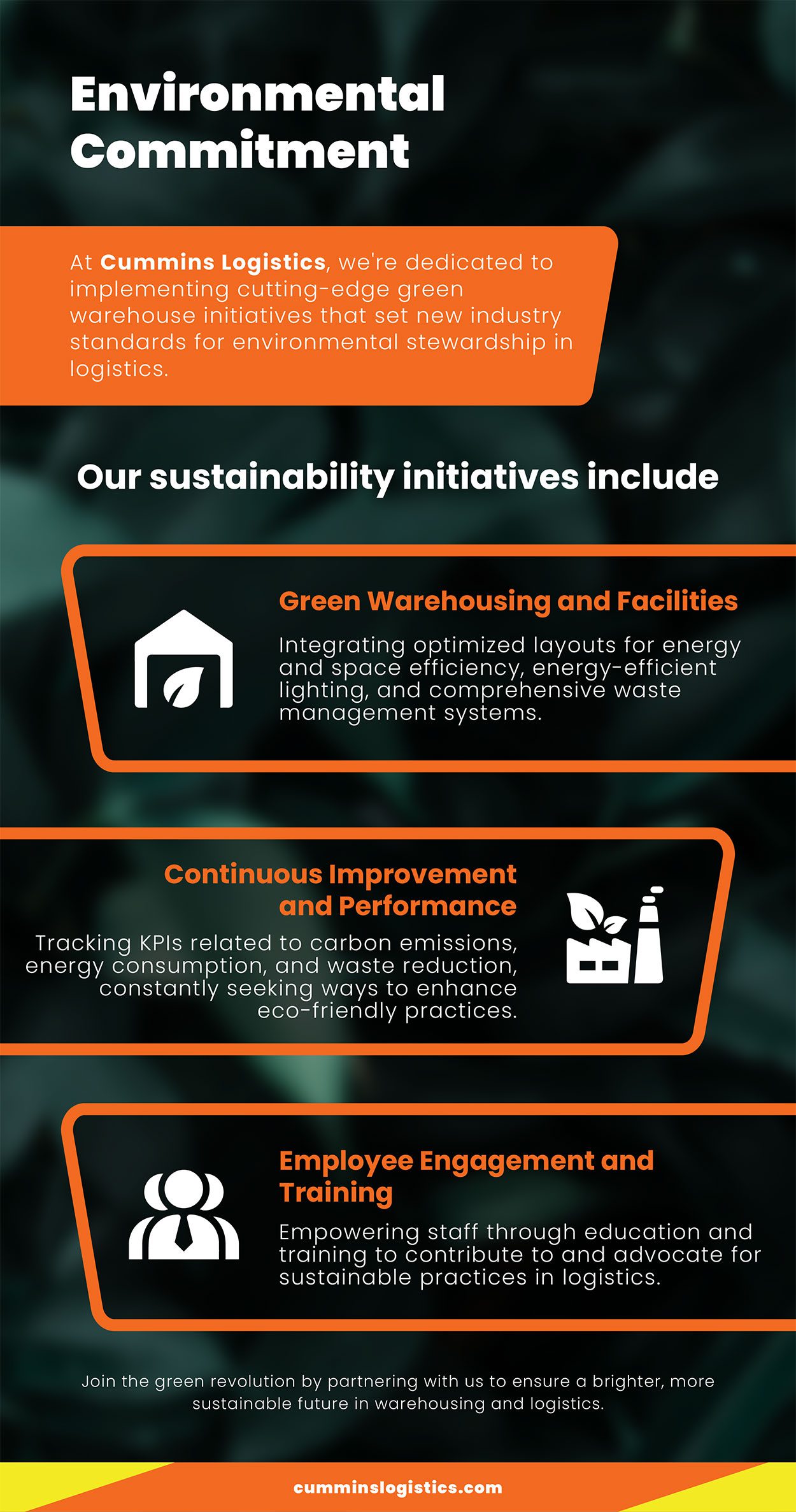
Green Warehousing Initiatives: Green warehousing and sustainable operations not only promote sustainability, but can also dramatically cut costs. Such smart warehousing solutions include:
Savings: LED lighting, solar installations, and energy-efficient HVAC systems.
A PR Boon: Apples to eco-savvy clients and supports corporate social responsibility (CSR) goals.
Smart Warehousing – The Undeniable Benefits
These smart warehousing innovations are more than just technological bells and whistles for Southern California’s third-party logistics providers. They deliver results – such as significantly boosting inventory management and supply chain visibility, or making operations more efficient and cost-effective. Key benefits include:
Tariff-rate quotas spark battles for allocations and lead to unusual business partnerships to maintain market access.
Sugar, dairy, and other food importers feel the squeeze acutely as food tariff rates over-quota can jump from single digits to 50%+ higher.
Smart importers leverage strategic storage facilities, letting them maximize quota usage while maintaining flexibility.
That chocolate bar you grabbed during yesterday’s grocery run? Behind its journey to American shelves lies a complex maze few shoppers ever consider. While you scanned ingredients or compared prices, food importers were dealing with the impact of tariff-rate quotas, a regulatory obstacle course that determined whether your treat arrived at all.
This hidden world of tariffs on food imports shapes our entire imported food landscape, creating business conditions where perfect timing, solid relationships, and access to strategic warehousing facilities are survival necessities.
Understanding Tariff-Rate Quotas
Think of tariff-rate quotas as a strange two-lane highway where the first vehicles enjoy smooth sailing at minimal cost, but once that lane fills up, everyone else gets diverted to a toll-road with rates so steep they often make the journey financially impossible.
When operating under the quota threshold, importers may not feel any impact of tariffs and pay rates near zero. Cross that invisible line, however, and rates can skyrocket, sometimes exceeding 200% for certain dairy items or over 60% for specific sugar categories. This dramatic difference effectively caps affordable imports each fiscal year.
Here’s where things get interesting. Because these quotas are limited and valuable, they’ve created a secondary market of sorts – not in the products themselves, but in the rights to import those products at the lower food tariff rates.
Sugar’s Sweet-and-Sour TRQ Reality
One Cummins Logistics customer recently found themselves in a precarious situation where they really felt the impact of tariff-rate quotas. The company imports sugar from Brazil under the U.S. sugar TRQ program. When they unexpectedly lost their buyer, they faced a dilemma: continue importing their allocated quota or lose their valuable TRQ-allocation and expose themselves to over-quota rates for tariffs on food imports in the future
“Many U.S. food importers don’t realize that failing to utilize their current TRQ allocation might affect their future allocation,” explains David Cummins, founder of Cummins Logistics. “It creates situations where importers need to find creative solutions fast.”
But what happens when market conditions change suddenly mid-year? This is where some importers find themselves seeking unconventional arrangements with other businesses. These might be legitimate business arrangements, or they could be backroom deals with officials that won’t be covered in mainstream business publications.
Dairy’s Food Tariff Conundrum
Sugar isn’t alone in facing these challenges. The dairy industry deals with similarly restrictive import quotas, In fact, in the U.S., the impact of tariff-rate quotas can be staggering as the import quotas for dairy amount to approximately 3% of total dairy production as of 2016. The USDA requires importers to obtain licenses annually between September 1 and October 15 to take advantage of low-tier tariff rates on food imports.
For businesses importing dairy-based products, these restrictions create intense competition for quota allocations. When importers face unexpected changes in their business arrangements, they often need to quickly find alternative buyers to maintain their quota position.
Strategic Warehousing: The Importer’s Secret Weapon
This is where strategic warehousing becomes essential in blunting the impact of tariff-rate quotas. Warehousing facilities near ports-of-entry provide importers with the flexibility to maintain their import schedules even when faced with market disruptions.
According to David Cummins: “Having access to reliable warehousing near the Los Angeles and Long Beach ports gives importers the breathing room they need when navigating TRQ challenges. Our 86,000-square-foot facility allows importers to store products while sorting out new distribution arrangements.”
For food-importers working with TRQ-regulated products, timing is everything. Sometimes the difference between paying the in-quota rate versus the prohibitive over-quota rate comes down to having warehouse space available to help mute the impact of this tariff policy.
Balancing Food Tariff Compliance with Business Realities
The TRQ system’s complexity sometimes leads to situations where importers seek creative arrangements to fully utilize quota allocations. Rather than circumventing regulations, it’s important for those importers to find business solutions within the framework of those regulations. For businesses affected by TRQs, partnering with a warehousing provider that understands these challenges can make a huge difference.
Moving Forward in a TRQ Environment
The reality of tariffs on food imports is far more nuanced than most people realize. Strategic warehousing will remain an essential tool for importers dealing with the impact of tariff-rate quotas. Need a warehousing partner who understands the unique challenges of food imports under TRQs? Contact Cummins Logistics today for a free quote on our month-to-month warehousing service options.
Contact Us
Reach out today to optimize your logistics and distribution with efficient and cost-effective warehousing solutions
Achieving warehouse optimization can be a major challenge for many businesses because it requires a delicate balance between speed, accuracy, and cost-effectiveness.
There are several strategies companies can implement to achieve this type of optimization, including utilizing scalable storage solutions, partnering with warehouse providers near ports of entry, and embracing technology like WMS, robotics, and AI.
Companies must also be willing to continuously improve their operations if they hope to achieve warehouse optimization by monitoring their progress toward key performance indicators (KPI) they set for themselves.
In the dynamic world of logistics, 3PL (Third-Party Logistics) companies have become pivotal in streamlining supply chains across various industries. These companies strive to provide secure logistics warehouse solutions, streamlined inventory management, and easily accessible distribution centers for their clients. This ensures orders are accurate and arrive at their destination on-time.
However, many businesses that rely on these companies face significant challenges in warehouse optimization, balancing the need for speed, accuracy, and cost-effectiveness. This blog post delves into key strategies that can significantly enhance your warehouse operations, ensuring you stay ahead in the competitive business landscape.
Embrace Scalable Storage Solutions
When it comes to ensuring efficient 3PL distribution, adaptability is key. Warehouses must be capable of responding to fluctuations in demand, a task that becomes easier with scalable storage solutions. Third-party logistics Warehouse optimization starts with adjustable shelving and pallet racking, which allow for the dynamic allocation of space based on current needs.
Moreover, mobile storage units offer unparalleled flexibility, effortlessly moved to optimize space usage. An often overlooked aspect of optimization is the use of vertical space. By maximizing storage capacity upwards, warehouses can significantly increase their inventory without expanding their footprint, offering scalable storage that you need as a growing business.
Master Online Inventory Management
The heart of warehouse optimization lies in robust inventory management. Real-time visibility and pinpoint accuracy in inventory tracking are non-negotiable for distribution center efficiency. Here, online Warehouse Management Systems (WMS) play a crucial role, providing a digital backbone for tracking and managing your inventory.
Today, WMS technology is rapidly advancing due to recent technological breakthroughs. AI, for example, can analyze millions of data points in minutes to deliver insight into when demand for specific items will spike and decline. This enhances warehouse optimization since companies can plan in advance when they will need to lease additional storage space to meet demand or keep fewer items in storage to reduce storage costs.
Modern technologies like RFID and robotics are also bolstering the capabilities of WMS while improving 3PL distribution center efficiency. Robotic systems integrate with WMS to place items on the correct shelves in a warehouse facility when they arrive. Later, when an item is included in an order, the system retrieves it from the shelf and transports it to the packing area. This increases fulfillment speed, reduces errors, and allows for warehouse optimization.
Similarly, Radio Frequency Identification (RFID) ensures that every item is represented as a data point in the system. As items enter the facility, employees scan their barcodes and enter them into the system. When they leave the facility, employees once again scan them so the WMS can track how many items are in transit. RFID tags enable tracking of items inside the warehouse, as well as in transit. This ensures warehouse managers and the companies whom they serve always have an accurate understanding of their inventory, which is critical for any warehouse optimization initiative.
But it’s not just about internal systems. Integration with other supply chain software ensures a seamless flow of data, eliminating silos and promoting transparency. Furthermore, access to mobile and cloud inventory management solutions brings efficiency to warehouse personnel, enhancing the speed and accuracy of operations.
Take Advantage of Port Proximity
In an era dominated by e-commerce and global trade, the strategic positioning of warehouses is more critical than ever for any warehouse optimization plan. Proximity to ports of entry offers a substantial competitive advantage for both 3PL distribution companies and you as a business owner. Immediate access to imported goods translates to faster order fulfillment and reduced transportation costs.
Being close to ports also means access to a variety of transportation modes – rail, air, trucking – affording greater flexibility in logistics planning. Additionally, this proximity can lead to cost savings in customs clearance and streamlined paperwork, furthering warehouse optimization efforts.
Prioritize Continuous Improvement
The pursuit of excellence in optimization is an ongoing journey. Proactive monitoring and analysis of warehouse performance help identify areas ripe for enhancement. Utilizing Key Performance Indicators (KPIs) can pinpoint aspects of operations that require attention, guiding efforts toward the ultimate goal of building exceptional logistics warehouse solutions.
Central to this approach is fostering a culture of continuous improvement within the warehouse management team. Regular training and upskilling of employees not only boost efficiency but also ensure high accuracy in every process–all of which are key to warehouse optimization.
Streamline Your 3PL Warehousing and Distribution Needs
By implementing these strategies, you can significantly enhance your operational efficiency, gaining a competitive edge in the fast-paced world of logistics. For those seeking expert guidance in warehouse optimization, Cummins Logistics offers tailored third-party logistics warehouse solutions to meet your unique operational needs. Reach out to us for a partnership that transforms your warehousing and distribution needs into a model of efficiency and effectiveness.
Some of the metrics used to measure warehouse performance include receiving efficiency, which is the average amount of inventory received at a warehouse facility every hour, the carrying cost of inventory, which is the total cost of storing inventory in a given time period, and inventory turnover, or the number of times inventory is sold or used in a given period.
How do you optimize warehouse capacity?
Warehouse operators must first analyze their current space utilization. Once they understand how much space isn’t being utilized, they can implement some of the following measures:
Extend storage racks upward
Reducing aisle width
Adding half-pallet locations
Storing items in trailers on a short-term basis
Using WMS to discover optimal arrangements for packing items
What are common warehouse layout strategies for optimization?
Warehouses typically use one of three layouts:
U-Shaped: Shipping and receiving bays are located at each side of the “U” and storage is in the middle.
I-Shaped: Shipping is at one end of the I and receiving is at the other end.
L-Shaped: Receiving is at the stop of the L and shipping is at the bottom.
Contact Us
Reach out today to optimize your logistics and distribution with efficient and cost-effective warehousing solutions
Smart warehousing strategies can enable LTL logistics by streamlining operations, reducing costs, and enhancing overall supply chain efficiency for smaller freight loads.
Some of the key strategies for achieving this type of operational excellence include employing an efficient warehouse layout and design, using technology like warehouse management systems to track inventory levels in real-time, and partnering with warehouse providers in strategic locations.
Technology also plays a key role. Warehouse management systems, order management systems, and transportation management systems automate repetitive, error-prone tasks while offering companies visibility across their entire supply chain.
To monitor the success of newly-implemented warehousing strategies, companies must track warehousing KPIs, such as inventory accuracy and turnover rate.
Logistics decisions can make or break your business operations. When dealing with Less-than-Truckload (LTL) logistics, the stakes are even higher. Smart warehousing strategies become essential to streamlining operations, reducing costs, and enhancing overall supply chain efficiency for smaller freight loads. In this post, we’ll explore strategies, focusing on key factors like choosing a strategic location, capacity utilization, inventory management, and cost reduction techniques. Here are some warehousing insights to elevate your business operations.
Strategic Warehouse Location
Picking the right location for your warehousing needs sets the stage for efficient LTL logistics. It’s more than just picking a central spot —it’s a strategic move. For instance, if you operate in Southern California, the proximity of the warehouse you select to major ports like Los Angeles and Long Beach is one of the most critical warehousing strategies. Being close to your customers reduces last-mile delivery times and costs. Proximity to major highways, ports, and railways streamlines transportation and cuts transit times.
Be sure to select between centralized and decentralized warehousing models, depending on your specific LTL logistics needs. Centralized warehousing consolidates inventory in one place. It simplifies inventory management and lowers operating costs, but it can also increase transportation distance and time. Decentralized warehousing means relying on multiple warehouses across regions, closer to customers. It decreases shipping times and costs, marginally increasing inventory management complexity.
Efficient Warehouse Layout and Design
An efficient warehouse layout is one of the critical warehousing strategies to ensure the smooth flow of multiple small shipments that characterize LTL logistics. Key functional areas to focus on for pallet-level warehousing processes include receiving, storage, and distribution capabilities. You’ll want a warehouse that designates an efficient unloading area to minimize bottlenecks, ensuring smooth pallet intake. Look for designated staging areas for incoming shipments to optimize inbound operations. The warehouse space should be organized ergonomically, maximizing utility and optimizing storage density to make the most of available capacity.
Look for warehousing that offers high-density pallet racking systems and deep-lane storage solutions that accommodate a greater volume of pallets. You’ll also need an LTL logistics provider that incorporates a well-structured distribution center to facilitate efficient pallet handling and management. Well-coordinated and streamlined warehousing ensures your logistics requirements are met. The use of innovative warehousing strategies, such as Automated Storage and Retrieval Systems (AS/RS), also simplifies complex processes, cuts down on human error, and speeds up operations.
AS/RS uses robotics and other hardware to quickly and efficiently move items from inbound trucks to storage shelves, which makes them a powerful tool for LTL logistics. Then, once items are included in an order, the system uses either conveyor belts or robotic pickers to retrieve the items and then transport them to a center where a human employee packs them into boxes before loading them onto an outbound truck.
AS/RS are complex systems. Companies interested in implementing AS/RS should speak with vendors in the space to compare prices and product capabilities to find the one that best matches the specifications of their facility and the needs of their team.
Real-Time Inventory Management
Achieving the right balance in inventory management for LTL logistics is critical. Advanced tools and predictive algorithms can help in demand forecasting and inventory planning, using historical data, seasonal trends, and real-time analytics to fine-tune inventory levels. ABC inventory analysis is another useful warehousing strategy, in which inventory is categorized into high-value and low quantity (A-items), moderate value and quantity (B-items), and low-value and high quantity (C-items).
Implementing ABC analysis is fairly simple. The steps are as follows for LTL logistics:
Determine A, B, and C items by first gathering data such as sales history, inventory levels, and the cost of each item in your warehouse.
Divide the sales of each item by the total sales for a predetermined period of time to determine their coefficient.
Categorize each item as A, B, or C based on their coefficient. Those with the highest coefficient should be in the A category and those with the lowest should be in the C category. This thoughtful categorization is critical for LTL logistics.
Implement systems of control to monitor each category of item. A items should be closely monitored, while C items can be monitored on a periodic basis.
Additionally, combining ABC analysis with a Warehouse Management System (WMS) enhances quality control and inventory accuracy, providing real-time tracking to prevent discrepancies and support effective logistics. By providing insights into inventory movements and stock levels, a WMS helps maintain the right balance of inventory, reduces the risk of stockouts or overstocking, and improves overall operational efficiency.
Order Fulfillment Processes
Prioritizing quick and accurate order fulfillment is crucial for satisfying LTL logistics requirements. Streamlined order fulfillment involves multiple warehousing strategies aimed at enhancing efficiency and reducing errors. One effective approach is cross-docking, which minimizes storage time by moving goods seamlessly from receiving to shipping, thus expediting LTL shipments and keeping inventory lean.
With cross-docking, it’s important to first analyze how goods currently flow through your facility. In most cases, inbound trucks arrive at the facility. Warehouse employees unload, then move the goods to the storage area. When the items are needed, they are then moved to a section where they are loaded and shipped. Cutting down on the number of steps is important for LTL logistics.
Once an existing workflow has been diagrammed, warehouse leaders then need to strategize with facility managers on how to best rearrange the facility to support the flow of goods from the inbound bay to the packing area or outbound bay immediately after they arrive. There are several commonly-used warehouse layouts that support this flow of goods.
Leveraging advanced order management systems (OMS) can synchronize orders and shipments in real-time, ensuring that information flows smoothly between the warehouse and logistics partners. This makes it possible to support a high volume of shipments under LTL logistics.
Implementing robust quality control measures at each stage of the fulfillment process can further ensure accuracy and reduce the likelihood of errors. Moreover, integrating transportation management systems (TMS) with warehouse management can help optimize routing and scheduling, ensuring timely deliveries. These warehousing strategies collectively enhance logistical efficiency and contribute to better customer satisfaction.
Convenient Warehousing and Distribution Services
Convenient warehousing and distribution services are key to streamlining LTL logistics. As mentioned earlier, strategically placed warehouses facilitate quicker deliveries and enhance customer satisfaction. Security assurance is also key to protecting goods from theft and damage. Cost-effective operations can also be realized with warehouse automation to optimize operations, reduce labor costs, and minimize errors.
Optimizing LTL performance is possible through coordinated strategies that minimize delays and improve inventory flow. By having strong partnerships with import logistics providers, businesses can ensure smooth customs clearance and LTL logistics. Finally, access to innovative Warehouse Management Systems (WMS) and real-time tracking enhances inventory accuracy and decision-making. These warehousing strategies ensure efficient, secure, and cost-effective operations, ensuring customer expectations are met.
Warehousing Technology
Like any other line of business, warehousing companies are run on software and hardware. Three in particular are key to optimizing LTL performance: Warehouse management systems (WMS), transportation management systems (TMS), and order management systems (OMS). Below, you’ll find details on what each of these systems are and how they support LTL logistics:
Warehouse Management Systems (WMS): WMS plays a range of roles in warehouse operations. These systems track inventory levels and the movement of goods, help manage picking, packing, and shipping, and provide insight into overall warehouse performance. Less-than-truckload logistics involves a high volume of small shipments. Warehouse teams can easily lose track of goods, or lack visibility into the status of orders. With WMS, operators can get real-time insight into stock levels and can quickly find the status of every order, which improves coordination while reducing errors and late deliveries while optimizing LTL logistics.
Transportation Management Systems (TMS): Transportation management systems help warehouse operators build optimal routes for drivers, track shipments in real-time, manage interactions with trucking vendors, and automate payments. LTL requires tight coordination between trucking and warehouse companies, and TMS makes it possible.
Order Management Systems (OMS): Warehouse companies use OMS to keep track of all their orders. These systems streamline tasks such as order entry, fulfillment, inventory management, customer service, and payments by creating a central hub for warehouse teams. OMS is critical for LTL logistics since it automates many error-prone and time-consuming tasks, which makes it possible for warehouse teams to handle smaller truckloads that arrive often.
Measuring LTL Performance
When companies choose to implement any new strategy, it’s critical that they objectively assess its impact on their business. Otherwise, it can be difficult, if not impossible, to judge whether the implementation was successful or not. Warehousing strategies are no different.
A few simple key performance indicators (KPIs) companies can track to measure the effectiveness of their LTL logistics include:
Inventory Accuracy: The actual number of items a company has in storage compared to the amount recorded in its inventory management system. This KPI shows how well your company tracks and manages inventory once it enters your warehouses.
Receiving Cycle Time: The average amount of time it takes to process newly-received items at your warehouse. With LTL logistics, items arrive often. It’s important to know whether the team is up to the task of processing them as they arrive.
Inventory Turnover Rate: Measures how many times inventory is sold and then replaced in a given time period. This not only shows you which items are moving slowly and quickly, but also whether you are potentially spending too much money on storage costs for items that are less in-demand.
Get Started With Cummins Logistics
Mastering warehousing strategies requires a holistic approach. With a combination of these strategies, businesses can expect fewer disruptions, reduced costs, and higher customer satisfaction. The trend towards increased adoption of smart warehousing technology promises even further efficiency in the future. Talk to an expert at Cummins Logistics to start strategizing today to transform your Less-than-Truckload logistics operations.
Contact Us
Reach out today to optimize your logistics and distribution with efficient and cost-effective warehousing solutions
This article discusses the key factors behind successful logistics operations in the Los Angeles area, including:
Strategically locating their warehouse facilities near ports of entry, major transportation networks, and population centers.
Having a deep understanding of potential supply chain disruptions.
The ability to quickly process incoming items and get them back on the road for deliveries.
Achieving real-time visibility into inventory levels
Partnering with logistics providers who are responsive to the needs of their clients.
Managing logistics in Southern California isn’t for the faint of heart.
There are thousands of miles of roadways that span across the region, and, every day, millions of drivers take to these roads to make their daily commute. There are also railways headed in nearly every direction and dozens of ships arriving at the Ports of Los Angeles and Long Beach every day.
The good news is that you don’t have to go it alone. Partnering with a 3PL warehouse vendor can help you nail logistics operations in the region.
Here are some critical factors behind successful logistics in Southern California.
1. They Strategically Locate Their Facilities Near the Ports and Major Roadways
After imported goods arrive at either one of the region’s ports, companies need to store them in a warehouse. But, if your company is like many others in Southern California, you’re struggling with delayed deliveries stemming from truck congestion at either one of the region’s ports. Location is a key factor of streamlined supply chain logistics operations.
Every day, more than 10,000 trucks enter and leave the Ports of Los Angeles and Long Beach. This creates an unimaginable level of traffic congestion. As a result, warehouse operators must locate their facilities near enough to the Ports of Los Angeles and Long Beach to minimize the amount of time it takes for trucks to pick up the items and drop them off and promote streamlined logistics operations, since many make multiple trips throughout the day.
At the same time, warehouses need to be located in a part of the region that is as close as equidistant to its major centers of commerce – including Los Angeles, San Diego, Long Beach, and Anaheim – as possible. This minimizes the amount of time it takes to deliver items from the warehouse facility to the end customer. Just as importantly, warehouses must be in close proximity to major highways and railways.
2. Their Employees Understand the Factors that Can Disrupt Logistics in the Region
A second critical factor of successful logistics operations is an understanding of potential supply chain disruptions within a region. There are countless sources of disruption in Southern California. It’s not a matter of if they will happen, but when. These disruptions can delay orders and leave your business in a precarious position.
Whether it’s a wildfire in one of the region’s forests, an earthquake, or just your everyday traffic jam, potential slowdowns are inevitable. In fact, the average commute in Los Angeles takes more than 30 minutes. Skilled 3PL providers can, however, minimize the frequency of delayed orders and promote smooth logistics operations by having contingency plans in place. If, for example, the I-5 is shut down because of a car accident, the 3PL could prevent slowdowns in logistics operations by alerting drivers and redirecting them toward an alternative route used in the past.
Alternatively, 3PL partners can choose the optimal source of transportation. During periods when freight trains are offering low rates, for instance, they could choose to ship goods to their final destination via train rather than truck. This keeps logistics operations costs low while minimizing late deliveries.
3. They Can Receive Imported Goods–and Then Quickly Get Them Back on the Road
During periods of high customer demand, items can move off of warehouse shelves quickly. This fast movement of goods can make logistics in Southern California even trickier than usual. If your company is struggling to keep up with demand while keeping transportation costs down, you may want to explore a partnership with a 3PL warehousing provider.
Top 3PL warehouse companies are prepared for these periods of elevated activity. Through a logistics operations process called cross-docking, items can be unloaded from an inbound truck and quickly loaded onto an outbound truck. With cross-docking, items are never removed from pallets. Instead, the pallets are transferred from one side of the facility to the other. Great operators can unload a truck and have items on their way in short order, which is a key factor of successful logistics operations.
4. You Can Get Real-time Access to Your Company’s Inventory Levels
Does your company struggle to keep track of its inventory levels? You’re not alone. Forty-three percent of small businesses say they aren’t tracking their inventory at all. Unfortunately, this lack of visibility can be costly.
Stockouts can lead to missed sales, while overstocking can inflate storage costs. The good news is that modern technology has made it easy for companies to see how much inventory they have on hand at their 3PL partner’s warehouse facility, which is a critical factor behind modern logistics operations. Inventory management software allows users to see how much inventory is stored in the facility, when their next delivery is expected to arrive, and more.
This type of transparency makes it simple for companies to coordinate with their contacts at the 3PL facility, and follow up with their suppliers if orders are delayed or incorrect.
5. They Are Responsive to the Needs of Their Clients
Companies are constantly changing. A once popular product could quickly fall out of favor with customers. Suppliers can change. Customer bases can expand. If you’re a rapidly growing company that’s struggling to keep up with customer demand, a quality 3PL provider can help.
No matter the change, 3PL providers need to be ready and willing to change alongside their clients. Whether it’s expanding the amount of storage space their client needs in a short amount of time or adjusting how pallets are stored in the facility, nimble operators have the personnel and systems in place to quickly adapt.
Inflexibility is one of the most significant factors behind inefficient logistics operations. The best 3PL warehouse providers understand this and are always willing to evolve.
Master Southern California Logistics with Cummins Logistics
Find out today why Cummins Logistics has been one of the most trusted names among 3PL providers for more than 40 years!
Many companies that sell physical goods eventually reach a point when they need to make a major decision: Should we continue to manage our supply chain operations internally or outsource it?
If your company has reached this critical juncture and you’re exploring available options, you’ve probably encountered quite a bit of new terminology, like third-party logistics, cross-docking services, and transloading services. Two of these terms that often trip companies new to the world of supply chain logistics management are contract logistics and warehousing.
On the surface, the two services appear similar. But there are some key differences between them. Let’s discuss some of these distinctions and the benefits each service offers businesses.
Logistics: The Science of Acquiring, Storing, and Shipping
At the most basic level, logistics refers to how a company gets the materials it needs to do business, where and how it stores them, and how it ships them between its facilities and to its end customers.
With contract logistics, companies outsource at least one of those components. Contract warehousing involves the outsourcing of the storage component. They could, for example, partner with a vendor to transport goods from a port to a warehouse the company owns and then from the warehouse facility to their final destination.
Other services offered by logistics partners include:
Order processing
Inventory management
Packaging
Procurement
Companies opt to outsource different components of their supply chain management function for a number of reasons. Some of these reasons include:
Cost Savings
Managing supply chain logistics internally rather than turning to contract logistics can be costly. For one, businesses need to invest in infrastructure and equipment, such as storage facilities and trucks, to transport and store goods. This not only requires a significant upfront investment, but also ongoing costs.
On top of facility and equipment costs, companies who choose to manage supply chain operations internally must also invest in personnel, including drivers and supply chain managers. By partnering with a contract logistics vendor, companies can avoid taking on the fixed and variable costs associated with handling supply chain logistics in-house.
Expertise
Supply chain logistics is a complex area of business. It requires specialized knowledge, including knowledge of various software systems. But perhaps more importantly, supply chain management works best when each individual involved has established relationships with the others.
When your company chooses to work with a contract logistics vendor, you can tap into this expertise. The vendor can analyze your existing supply chain management processes and identify areas for improvement.
Focus
Companies perform best when they focus on what they do best. If customers continue to turn to a company’s products because they are reliable and of high quality, that company should devote most of its attention to continuing to improve its production processes. Attempting to be the best at supply chain management, as well, would only divert the company’s focus away from these core activities.
Working with a contract logistics provider removes the need for your company to be a jack of all trades. You can master one area of business and turn the rest over to the experts.
So, what separates outsourced logistics from contract warehousing? Let’s dive into it.
Space for Your Items At a Price You Can Afford
When you first launch a business, you can usually store items in your home. Slightly larger businesses may even have office space dedicated to storing products. But, sooner or later, companies need more space than they can immediately access. That’s when outsourced warehousing services come into play.
Companies that choose to outsource their warehousing function lease space in a warehouse facility. Other companies store their goods in the facility, as well. In such arrangements, the company is typically responsible for transporting goods to and from the warehouse facility. Meanwhile, warehouse employees coordinate pickups and deliveries.
There are a number of benefits to contract warehousing, including:
Cost Savings
Rather than purchasing a warehouse facility, staffing it, and paying ongoing maintenance and facility costs, companies can instead outsource their storage and only pay the cost of renting only the storage space they need.
Specialized Services
Earlier, we mentioned cross-docking and transloading. When you partner with a warehousing vendor, your company can reap the benefits of these services. With cross-docking, companies that quickly turnover inventory can have incoming goods quickly moved from an incoming truck through the warehouse facility and onto an outbound truck. And, with transloading, goods are moved from a truck to a different mode of transportation, such as trains and delivery trucks.
Superior Technology
Many warehousing vendors use inventory management software that allow clients to view current inventory levels and drill into insights such as their average inventory turnover time.
Trust Cummins Logistics for Your Warehousing Needs
Cummins Logistics has more than 50 years of experience in developing warehousing and logistics solutions for companies of all sizes. Learn more about our services today!
High transportation costs in logistics are a major challenge, significantly impacting overall expenses. In fact, in 2022 alone, U.S. companies spent $1.39 trillion on transportation. The further goods must travel from ports to warehouses, the higher the fuel, time, and handling costs, eroding profit margins. If you’re wondering how to reduce transportation costs for your business, partnering with a warehouse vendor near major ports is a viable solution. This warehousing approach strategically locates storage facilities near ports, slashing the distance goods travel, resulting in immediate transportation cost savings.
By leveraging the proximity to ports, businesses can streamline their warehousing operations, reduce the need for extensive inland transportation, and improve overall supply chain efficiency.
How Port-Centric Warehousing Reduces Transportation Costs
Whether you’re a growing business grappling with the complexities of global supply chains or a large enterprise looking to optimize logistics expenses, port-centric logistics emerges as a pivotal strategy for reducing transportation costs. Here’s how it helps:
Reduced Inland Transportation Distance
Many businesses are seeking strategies on how to reduce transportation costs in logistics. One proven way is by embracing port-centric warehousing, which significantly reduces the distance goods must travel from the port to the storage or distribution centers. By strategically locating warehouses close to ports, such as the Ports of Los Angeles and Long Beach, businesses can drastically reduce the mileage that goods are transported inland, directly leading to reduced fuel consumption and lower transportation expenses.
This reduction is particularly significant in road and rail transport costs, where distance is a direct factor in pricing. For instance, shorter trips mean fewer fuel charges and less vehicle wear and tear, translating into notable cost savings and more sustainable warehousing operations.
Streamlined Supply Chain Operations
A port-centric warehousing strategy significantly streamlines supply chain operations, enabling a smoother and more efficient flow of goods from ship to storage. This proximity is an effective strategy on how to reduce transportation costs in logistics as it facilitates quicker unloading, sorting, and redistribution processes. This effectively minimizes the need for repeated handling and movement of goods.
Such efficiency accelerates the overall logistics timeline and substantially reduces the costs associated with handling and transportation. By simplifying these operations, businesses can achieve a leaner, more responsive supply chain, contributing to lower operational costs and enhanced customer satisfaction through faster delivery times.
Enhanced Inventory Management
Port-centric warehousing revolutionizes inventory management by facilitating just-in-time (JIT) practices, which minimizes the necessity for large stockpiles and the hefty storage costs they incur. For example, in 2024, U.S. companies paid $20.37 per pallet on average for storage. This approach aligns with modern demand-driven logistics, allowing businesses to maintain leaner inventories and reduce waste and redundancies.
Integrating warehousing systems is also an effective strategy for reducing transportation costs in logistics. In this context, these systems enable precise tracking and real-time visibility of inventory levels, ensuring that goods are replenished efficiently and moved quickly from port to customer, minimizing transportation and storage durations, and cutting down on expenses.
Improved Turnaround Times
Improved turnaround times are another benefit of port-centric warehousing, significantly accelerating the transition of goods from ships to storage facilities. This expedited process is crucial for enhancing the overall efficiency of logistics operations, as it sharply reduces the time products spend in transit. A quicker turnaround streamlines the supply chain and minimizes costly demurrage charges, which can range in cost between $75 and $300 per day, that accrue from delays in unloading cargo. It’s also critical for preserving the freshness of goods such as foods and cosmetics.
Faster processing times can also lead to reductions in other time-sensitive costs, such as storage fees at the port. This efficiency results in more predictable logistics timelines and improved customer satisfaction through timely deliveries.
Consolidation Opportunities
Consolidation opportunities provided by port-centric warehousing present a significant advantage for businesses looking to optimize their logistics. By enabling the consolidation of shipments right at the port, you can achieve superior container utilization, ensuring that each container is filled to its maximum capacity. This strategic consolidation is a great strategy for reducing transportation costs.
It leads to a reduction of transportation costs in logistics by maximizing the efficiency of each shipment but also decreases the overall number of trips required to transport goods. This reduction in trips directly translates into reduced transportation expenses, offering a dual benefit of cost savings and enhanced logistical efficiency. This makes port-centric warehousing a win-win for businesses aiming to streamline their supply chain operations.
Talk to an Expert to Learn More
At Cummins Logistics, we understand the intricacies and challenges of managing transportation costs in logistics. With our strategic location near the Ports of Los Angeles and Long Beach and commitment to outstanding customer service, we’re here to help businesses like yours leverage port-centric logistics to significantly reduce those costs. By choosing us, you’re opting for a partner dedicated to streamlining your import and distribution operations, ensuring you can focus on what matters most—growing your business.
Let us show you how our near-port facility and personalized service can transform your logistics strategy. Want more tips on how to reduce transportation costs in logistics? Talk to an expert to learn more.
Contact Us
Reach out today to optimize your logistics and distribution with efficient and cost-effective warehousing solutions
The City of Angels isn’t always heavenly. Businesses in and around Los Angeles face unique challenges and opportunities in managing their supply chains. Choosing to partner with a third-party logistics (3PL) provider is a strategic decision that offers a range of benefits – particularly for those operating near Southern California’s bustling ports. Businesses operating in the LA area benefit from 3PL providers offering reliable storage solutions. These partnerships streamline operations, improving efficiency and market responsiveness. This translates to a stronger bottom line for companies navigating the competitive LA market.
SoCal 3PL partners offer businesses a competitive edge via streamlined operations and logistical expertise. These partnerships optimize supply chains for improved efficiency.
FACT
Los Angeles County has the nation’s largest economy and the third largest metropolitan economy in the world, with a gross domestic product (GDP) of $1.295 trillion in 2023.
Benefits of a 3PL Warehouse Near Los Angeles
🗹 Reduced Costs and Enhanced Efficiency
🗹 Improved Inventory Management and Security
🗹 Proximity to Major Ports and Distribution Hubs
🗹 Expertise and Flexibility
🗹 Streamlined Operations and Scalability
🗹 Focus on Your Core Business
1. Reduced Costs and Enhanced Efficiency
Saving money quickly is a good thing. Utilizing 3PL warehousing services in the Los Angeles area can lead to significant savings in logistics and supply chain management. How? These providers have specialized knowledge and systems that streamline third-party warehousing operations, reducing errors and increasing efficiency. Having a warehouse near the economic hub of Los Angeles is advantageous. Companies minimize transportation delays while ensuring a smoother flow of goods. This reduction in time and cost inefficiencies is crucial for businesses looking to stay a step ahead while ensuring their products are delivered in a timely and cost-effective manner.
2. Proximity to Major Ports and Distribution Hubs
Proximity goes beyond convenience. The proximity of 3PL providers to Los Angeles ports also facilitates better coordination with shipping lines and customs authorities. Better coordination leads to more efficient import and export processes. This proximity is particularly beneficial for businesses with tight supply chain schedules, as it reduces the risk of delays associated with distant third-party warehousing options. The Los Angeles area is home to major transportation networks in the area, including highways and railroads. This ready access enhances distribution capabilities, making it easier to reach diverse markets quickly and effectively.
FACT
The Ports of Los Angeles and Long Beach process a third of all cargo arriving in the United States.
3. Streamlined Operations and Scalability
What goes up often comes down. Then back up again. 3PL warehouse providers near the Los Angeles area are well-equipped to handle varying levels of demand. That’s particularly beneficial for businesses experiencing seasonal fluctuations or rapid growth. It ensures that businesses can adjust their warehousing needs without worrying about the constraints of fixed resources. Additionally, 3PL providers often sweeten the pot with other value-added services, such as cross-docking services and transloading services, further streamlining operations and enhancing the value chain.
4. Improved Inventory Management and Security
Out of sight shouldn’t mean out of mind. Los Angeles 3PL vendors often use advanced technology. Technology such as inventory management software, provides real-time visibility into inventory levels. This critical third-party warehousing service helps in better forecasting, reduced instances of overstocking or stock shortages, and more informed decision-making. Additionally, these warehouses have robust security protocols and insurance policies. These policies provide peace of mind concerning the safety and security of stored goods.
FACT
The top five goods imported into the Port of Los Angeles in 2023 were furniture, auto parts, apparel, plastics, and electronics.
5. Expertise and Flexibility
Trust those who know. The expertise of 3PL providers in Los Angeles extends to navigating the complexities of compliance and regulatory requirements, which is crucial for businesses operating in international trade. They’re also adept at customizing logistics solutions to meet unique business needs – whether it’s handling edible goods, fragile materials, or high-value items. This level of expertise and flexibility in third-party warehousing allows businesses to adapt quickly to changing market demands and customer expectations.
6. Focus on Your Core Business
Enjoy staying in your lane. Finally, by outsourcing warehousing and logistics functions to 3PL warehouse partners near Los Angeles, businesses can devote more attention and resources to areas like product development, marketing, and customer service. This strategic focus is often key to fostering innovation and maintaining a competitive advantage. With the logistics side of the business in capable hands, companies can better align their efforts with long-term goals and strategies.
FACT
Los Angeles County has the nation’s largest economy and the third largest metropolitan economy in the world, with a gross domestic product (GDP) of $1.295 trillion in 2023.
Choosing the Right Third-Party Warehousing Partner
Choosing the right 3PL partner in Los Angeles is a critical decision for businesses looking to enhance their supply chain efficiency and market adaptability. In a bustling economic hub like Los Angeles, where timely and efficient logistics are crucial, the right warehousing partner can significantly streamline your operations. Here are the key factors to consider:
Location Proximity: Select a warehouse with facilities near key ports and transportation hubs near Los Angeles. This proximity is vital for efficient import, export, and distribution.
Scalability and Flexibility: Ensure the warehouse can accommodate your current needs and scale with your business’s growth. Look for 3PL warehousing partners in the Los Angeles area offering flexible terms, like month-to-month leases, to adapt to changing business demands.
Range of Services: A comprehensive service offering, including inventory management and supply chain and distribution management, is essential. The more integrated the services, the smoother your supply chain will be.
Technology Integration: Choose a partner that uses advanced technology for inventory tracking, order processing, and data management to ensure accuracy and transparency in operations.
Experience and Reputation: Consider the 3PL warehousing provider’s track record with clients in the Los Angeles area and industry reputation. Experience handling products like yours and positive client testimonials can be strong indicators of reliability and quality service.
Customer Service and Management Access: Good customer service and direct access to management are crucial for effective communication and quick problem resolution.
Compliance and Security: Verify that the warehouse adheres to industry standards and regulations and has robust security measures to protect your goods.
These factors will help ensure that your chosen 3PL partner aligns with your business objectives and supply chain requirements, allowing you to serve customers across the Los Angeles area.
FACT
Most goods arrived from China and Hong Kong in 2023. In total, the goods were worth $112 billion.
Explore Our Warehouse Facilities at Cummins Logistics
At Cummins Logistics, we understand the critical role that strategic warehousing plays in your business’s success. Since 1976, we have dedicated ourselves to providing top-notch third-party logistics services. Our 86,000-square-foot warehouse, located in Commerce, California, is ideally situated for businesses importing goods into the United States. We offer proximity to the key maritime ports of Los Angeles and Long Beach, eliminating the complexities and high costs of managing your own warehouse in these crucial areas.
This strategic location allows us to serve as an effective distribution center for markets both in Southern California and nationwide, providing convenient access right at the ports of entry. We pride ourselves on our flexible month-to-month service options for our third-party warehousing services, understanding that your business needs may change and evolve. This flexibility, coupled with our commitment to superior customer service, ensures that we’re not just a service provider, but a partner in your business’s growth and success.
If you’re searching for a warehouse in the Greater Los Angeles region, choose Cummins Logistics for a solution that prioritizes efficiency, convenience, and a personalized approach to your logistics needs.